I spent $400 on probiotics over two years. Lactobacillus acidophilus. Billion-CFU blends with 15 strains. The refrigerated ones from the health food store that cost $65 a bottle.
My bloating barely budged.
The problem wasn't probiotics as a category. The problem was I was taking the wrong strains — ones with marketing budgets but not much clinical evidence. When I finally dug into the actual research, I found three strains that kept appearing in study after study. Here's what the science says.
Walk into any pharmacy or health food store and you'll find dozens of probiotic supplements promising to transform your digestion, boost immunity, and help you lose weight. But with so many products making similar claims, how do you know which ones actually work?
The answer lies in the science of specific bacterial strains. Not all probiotics are created equal — and the difference between an effective supplement and an expensive placebo often comes down to which strains are included and at what concentration.
What Are Probiotics?
Probiotics are live microorganisms that, when consumed in adequate amounts, confer a health benefit on the host. They can be consumed through fermented foods (yoghurt, kefir, kimchi) or concentrated dietary supplements.
The key word here is "adequate amounts." A product that contains live bacteria but in insufficient numbers — or strains that can't survive the journey from mouth to colon — will have little to no effect.
📊 The World Health Organization defines probiotics as "live microorganisms which, when administered in adequate amounts, confer a health benefit on the host."
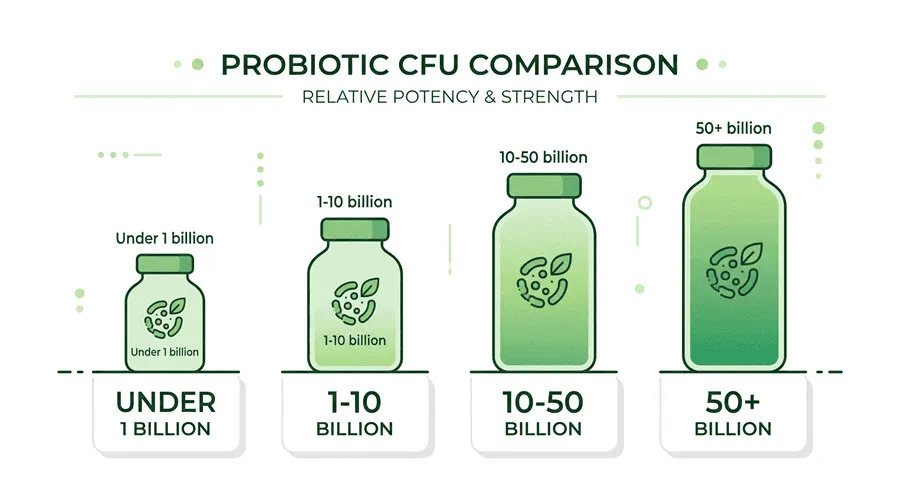
CFU count matters — but only when paired with the right strains.
How Probiotics Work
Once they reach the colon (assuming they survive the acidic environment of the stomach), probiotic bacteria work through several mechanisms:
- Competitive exclusion: Crowding out harmful bacteria by competing for attachment sites and nutrients
- Producing antimicrobial compounds: Secreting bacteriocins and organic acids that inhibit pathogen growth
- Strengthening the gut barrier: Stimulating the production of mucus and tight junction proteins that keep the gut wall intact
- Immune modulation: Interacting with immune cells to regulate inflammatory responses
- Metabolite production: Fermenting fibre to produce beneficial short-chain fatty acids like butyrate, propionate, and acetate
The 3 Strains With the Strongest Evidence
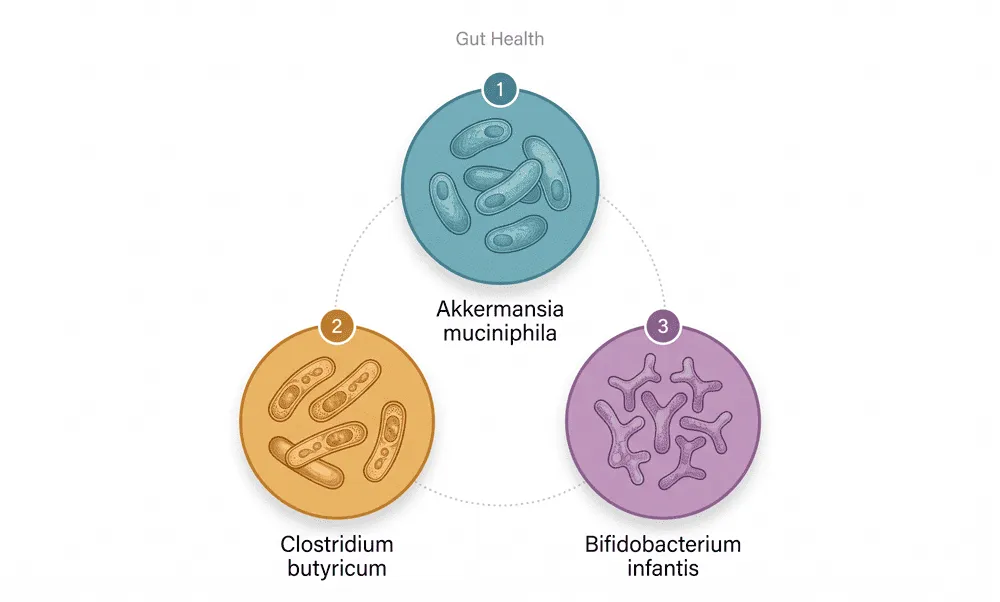
These three strains appear in more clinical metabolic studies than any others in the probiotic literature.
Thousands of bacterial strains have been studied, but the following three stand out for their robust clinical evidence in the areas of metabolic health, gut integrity, and digestive function.
Akkermansia Muciniphila
Often called the "keystone species" of metabolic health, Akkermansia lives in the mucus layer of the gut and plays a critical role in maintaining intestinal barrier integrity. Multiple human trials have associated higher Akkermansia abundance with lower body weight, improved insulin sensitivity, and reduced inflammation. Notably, people with obesity and type 2 diabetes consistently show depleted Akkermansia levels. Supplementation has been shown to increase its abundance and improve metabolic markers within 3 months.
Clostridium Butyricum
This strain is a specialist butyrate producer — generating the primary fuel for colon cells and a key regulator of gut inflammation. Butyrate is so important to colon health that a deficiency is associated with inflammatory bowel conditions, increased cancer risk, and metabolic dysfunction. Clostridium butyricum has demonstrated effectiveness in clinical trials for reducing intestinal permeability (leaky gut), improving bowel regularity, and supporting immune function. It is particularly valuable for people recovering from antibiotic treatment.
Bifidobacterium Infantis
One of the most extensively studied probiotic species, Bifidobacterium infantis is known for its ability to reduce bloating, gas, and abdominal discomfort. It achieves this partly by outcompeting gas-producing pathogenic bacteria, and partly through its strong ability to ferment a wide range of dietary fibres. Research also shows it can significantly reduce inflammatory markers in people with irritable bowel syndrome (IBS) and may help regulate appetite through its interaction with gut hormones.
Probiotic Dosing: CFU Counts Explained
CFU stands for Colony Forming Units — the measure of viable bacteria in a probiotic product. Understanding CFU counts helps cut through marketing hype:
| CFU Range | Typical Use Case | Effectiveness |
|---|---|---|
| Under 1 billion | Maintenance / food-based | Minimal for clinical benefit |
| 1–10 billion | General gut health support | Moderate — good for healthy adults |
| 10–50 billion | Active gut restoration | Strong — well-studied range |
| 50–500 billion | Post-antibiotic / clinical use | High — typically used therapeutically |
Most mainstream probiotic supplements contain 1–10 billion CFU. For meaningful therapeutic benefit — particularly for metabolic support and gut restoration — formulations in the 10–50 billion range with clinically validated strains are preferable.
⚠️ Important: More CFU is not always better. Strain selection and survivability matter more than raw numbers. A 500M CFU product with Akkermansia muciniphila may outperform a 50 billion CFU product with generic, poorly studied strains.
Probiotics vs. Prebiotics: What's the Difference?
Probiotics are the live bacteria themselves. Prebiotics are the non-digestible fibres that feed those bacteria. Think of probiotics as seeds and prebiotics as the soil and fertiliser.
The most powerful approach — and the one supported by the strongest research — is to take them together. This combination is called a synbiotic. The prebiotic fibres (such as chicory inulin and resistant starch) ensure that the probiotic bacteria have an immediate food source when they arrive in the colon, dramatically improving their survival and colonisation rates.
What to Look for in a Probiotic Supplement
- ✅ Clinically studied strains (not just genus/species, but specific strain designations)
- ✅ Adequate CFU count at time of expiry (not just at manufacture)
- ✅ Prebiotic co-factors included (inulin, FOS, resistant starch)
- ✅ Manufactured in a GMP-certified, FDA-registered facility
- ✅ Vegetarian capsule to protect bacteria from stomach acid
- ❌ Avoid proprietary blends that hide individual strain doses
- ❌ Avoid products with excessive fillers, artificial colours, or unnecessary additives
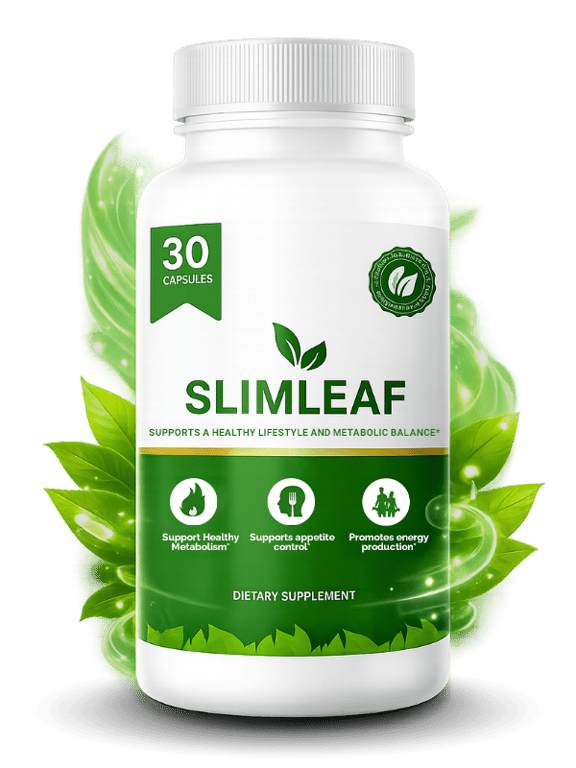
SlimLeaf Contains All Three Key Strains
With 500M CFU of Akkermansia muciniphila, Clostridium butyricum, and Bifidobacterium infantis — plus 211mg chicory inulin and 100mg resistant starch — SlimLeaf is formulated to the exact synbiotic standard described above.
Try SlimLeaf Risk-Free →
Without prebiotic fibers, your probiotic bacteria have nothing to eat. This is the mistake most people make.
How Long Before You See Results?
Probiotic effects are cumulative, not immediate. Here is a realistic timeline based on clinical research:
- Week 1–2: Some people notice reduced bloating and more regular bowel movements
- Week 3–4: Digestive comfort typically improves; energy levels may begin to stabilise
- Month 2–3: Microbiome composition begins to shift measurably; metabolic benefits become more apparent
- Month 3–6: Full colonisation and the most substantial benefits in terms of weight, energy, and immunity
This is why most probiotic researchers recommend committing to at least a 90-day protocol — and why a 6-bottle supply often produces more dramatic and lasting results than a single bottle.
Summary: The probiotic market is crowded with mediocre products. True effectiveness comes from selecting the right strains, at clinically meaningful doses, in a formulation that includes prebiotic support. If you choose wisely, a targeted probiotic supplement can be one of the most impactful additions to your daily health routine.